
How Much Should Apartment Service Charge Be?
What Is Service Charge, Really?

Service charge is the monthly fee collected from each flat in an apartment building to cover the shared cost of running the building — security, cleaning, common area electricity, lift maintenance, caretaker wages, and more. It is entirely separate from rent and covers facilities that every resident uses equally, regardless of flat size.
Many tenants assume it is extra income for the building authority. In reality, a medium-sized building's monthly operating costs — wages, electricity, repairs — easily run into several lakh taka. Even divided across 30–40 flats, each flat's share is substantial and often more than tenants expect.
What Expenses Belong in Service Charge?
Most building committees pick a number intuitively — often based on what neighbouring buildings charge or what was charged the previous year. The right method is to list every expense category, calculate a monthly total, and then divide by the number of flats. Here are the eight core components every service charge should cover:
| Component | Details |
|---|---|
| 🔒 Security staff | Gate guard, CCTV monitoring, night watch. One guard's monthly wage: ৳8,000–৳15,000. |
| 🧹 Cleaning staff | Lifts, stairwells, rooftop, ground floor, parking area. 1–2 staff. Wage: ৳6,000–৳12,000/person. |
| 🏠 Caretaker | Bill collection, minor repair oversight, day-to-day management. Wage: ৳8,000–৳15,000. |
| ⚡ Common area electricity | Lifts, stairwell lighting, rooftop, water pump, CCTV, intercom. Monthly: ৳8,000–৳30,000. |
| 🛗 Lift maintenance (AMC) | Annual contract with lift company. ৳30,000–৳80,000/year = ৳2,500–৳7,000/month. |
| 🔧 Repairs & maintenance | Plumbing, generator servicing, paint, small fixes. Budget ৳3,000–৳15,000/month rolling average. |
| 💧 Water pump & WASA | Maintenance of pumps, overhead tanks, and WASA connection. Often overlooked but a regular expense. |
| 🏦 Sinking fund | Reserve for future major repairs. Experts recommend at least 0.75% of construction cost annually. |
Service Charge by Dhaka Neighbourhood
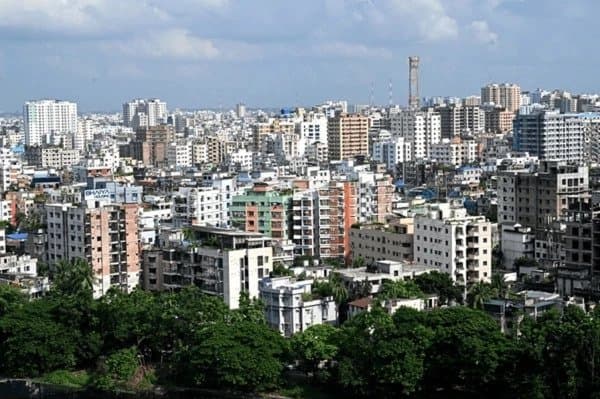
The figures below are based on property listings, resident accounts, and building committee data collected from across Dhaka. Your building's age, amenities, staff count, and size will affect actual figures — treat this as a directional reference, not a fixed benchmark.
| Neighbourhood | Service Charge (per flat) | Avg. Rent | Level |
|---|---|---|---|
| Gulshan, Baridhara | ৳15,000 – ৳40,000+ | ৳35,000 – ৳1,00,000+ | Premium |
| Banani, Niketan | ৳10,000 – ৳25,000 | ৳25,000 – ৳80,000 | High |
| Dhanmondi | ৳7,000 – ৳20,000 | ৳20,000 – ৳75,000 | Upper-mid |
| Bashundhara R/A | ৳5,000 – ৳12,000 | ৳18,000 – ৳50,000 | Mid |
| Uttara | ৳4,000 – ৳10,000 | ৳15,000 – ৳60,000 | Mid |
| Mohammadpur / Chandrima | ৳3,000 – ৳7,000 | ৳15,000 – ৳45,000 | Mid-budget |
| Mirpur DOHS | ৳4,000 – ৳9,000 | ৳15,000 – ৳50,000 | Mid |
| Mirpur (general) | ৳1,500 – ৳4,000 | ৳10,000 – ৳45,000 | Budget |
| Lalmatia, Shyamoli | ৳3,000 – ৳6,000 | ৳12,000 – ৳40,000 | Mid |
How to Calculate the Right Service Charge — 3 Steps
Step 1 — List every expense and calculate monthly totals
Go through every expense your building incurs. For annual costs (like the lift AMC), divide by 12 to get the monthly share. Below is a worked example for a 20-flat building in Mohammadpur:
| Expense item | Monthly amount |
|---|---|
| Security guard (1 staff) | ৳10,000 |
| Cleaning staff (1 staff) | ৳8,000 |
| Caretaker | ৳10,000 |
| Common area electricity (lifts, lights, pump, CCTV) | ৳15,000 |
| Lift AMC (annual ৳48,000 ÷ 12) | ৳4,000 |
| Water pump & WASA | ৳3,000 |
| Minor repairs (monthly rolling average) | ৳5,000 |
| Sinking fund contribution | ৳5,000 |
| Total ÷ 20 flats | ৳60,000 ÷ 20 = ৳3,000/flat/month |
Step 2 — Add a 10–15% buffer
Add 10–15% to your calculated total to cover emergency repairs, annual price increases (electricity tariff hikes, minimum wage increases), and the reality that some residents will always pay late or not at all. This buffer goes directly into the sinking fund and protects the building's cash flow when unexpected expenses arise.
Step 3 — Present it transparently to all residents
Share a brief income-expense breakdown with all residents when announcing the service charge — at the annual committee meeting, or when making any change. Show what was collected, what was spent, and what is in reserve. This single step reduces complaints by 70–80% in most buildings, because people stop questioning what they can clearly see.
Which Distribution Method Should You Use?
Method 1 — Equal split (recommended)
Every flat pays the same amount regardless of size. Simple to calculate, fewer disputes, and easy to communicate. This is the most common method across Dhaka buildings because everyone uses roughly the same common facilities — the lift, the stairwell, the security guard, the cleaning staff.
Method 2 — Per square foot basis
Larger flats pay more, smaller flats pay less. Theoretically fairer in terms of proportional use of space, but in practice the calculation becomes complex and owners of larger flats consistently resist this method at committee meetings.
How to Raise Service Charge the Right Way
Service charge should be reviewed once a year — staff wages, electricity tariffs, and repair costs all increase annually. But how you raise it matters as much as the amount itself. Follow this process every time:
- Present a full income-expense report for the past 12 months at the annual committee meeting. Show every line item — what came in, what went out, what is in reserve.
- Present projected costs for the coming year with specific reasons for any increase (e.g. security guard wage increase, electricity tariff hike, lift AMC renewal).
- Take a formal vote or obtain written consent from building members for the proposed new rate before implementing it.
- Give at least 30 days' written notice before the new rate takes effect. Surprise increases never go down well.
- Communicate the reasons in writing — not just a WhatsApp message. A printed notice or a PDF creates a paper trail and signals that this is a considered decision.
The Core of Transparent Management

Transparency is no longer optional. Residents are increasingly aware of their rights and expectations. Building committees that maintain clear accounts consistently collect more and face far fewer disputes than those that don't.
Create a brief monthly report showing: total collected, total spent, expense breakdown by category, and closing balance. Share it in the building WhatsApp group. The result — fewer arguments and faster payments, consistently every month.
Ready to simplify your building management?
Join thousands of property managers across Bangladesh.
Get started free